Reef Manta Ray
Rays and SkatesMobula alfredi
Disc Width 5.5 metres
Detail Information
One of the largest ray species, inhabiting warm-water reefs
Diamond-shaped body
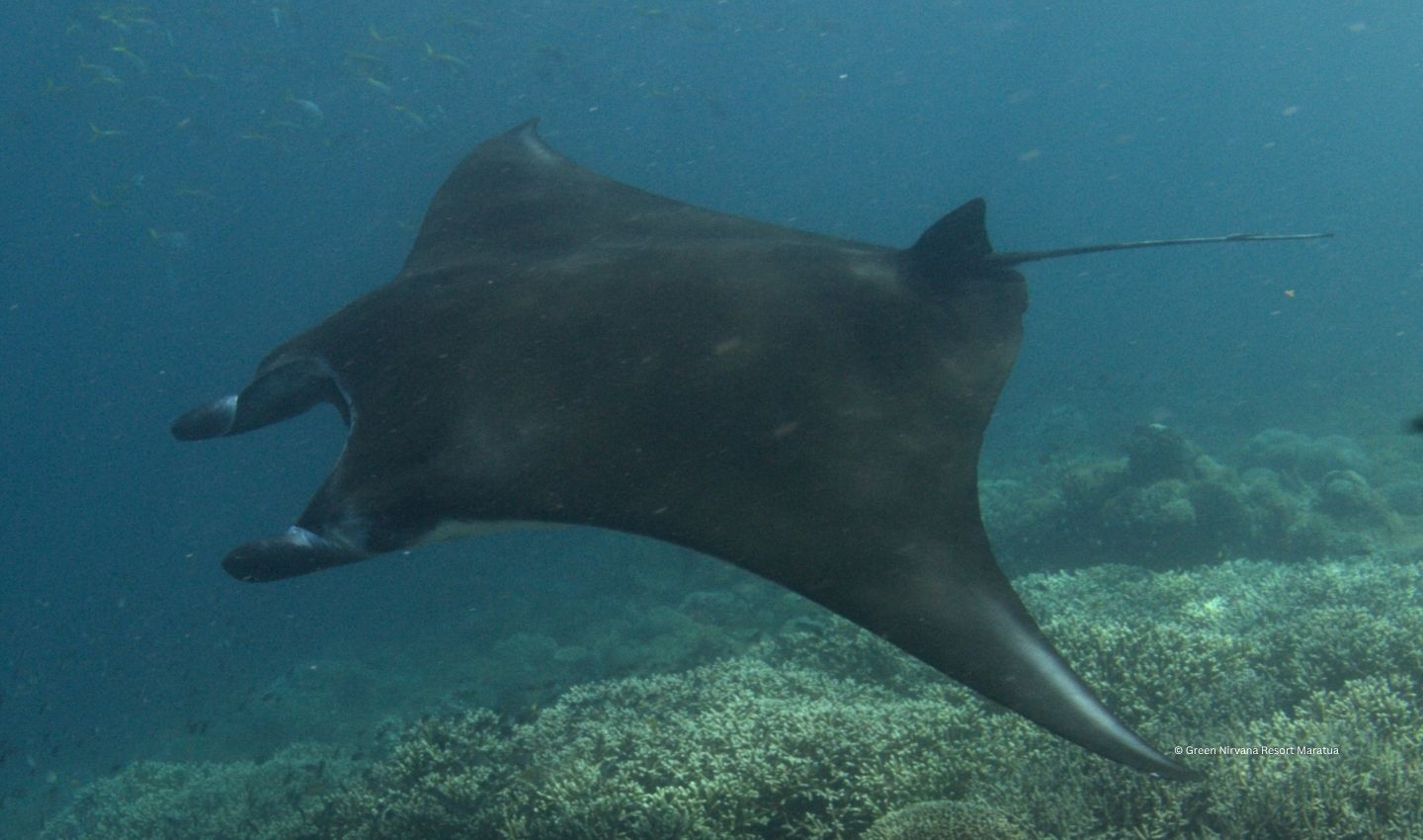
Reef manta rays have a broad diamond-shaped body with a dark upper surface and a white underside. Their wingspan or disc width averages between 3 and 3.5 metres. They also have pale grey V-shaped lines on their backs and spot patterns on their underside that distinguish them from similar species.
Life in productive waters
Reef manta rays are known to inhabit reefs and atolls in tropical or subtropical waters that support high biodiversity. Their main food sources, including plankton and fish eggs, are abundant in these areas.
Reef manta rays swim with their mouths wide open to filter plankton from the water. While doing so, they extend their cephalic fins to funnel water into their mouths and use specialized gill rakers to trap the plankton.
During the day, reef manta rays can often be seen gliding near cleaning stations, where smaller fish and shrimps remove parasites from their bodies.
Cyclone feeding
Reef manta rays sometimes display a remarkable feeding behavior known as cyclone feeding, where dozens to hundreds of individuals swim in a spiral formation around dense patches of plankton, allowing them to feed more efficiently.
Scientific Classification
- Kingdom
- Animalia
- Phylum
- Chordata
- Class Subclass
- Chondrichthyes – Elasmobranch
- Order
- Myliobatiformes (stingrays and relatives)
- Family
- Mobulidae (devil rays and manta rays)
- Species
- Mobula alfredi
Take part as a citizen scientist
Every encounter with elasmobranchs will be valuable data to support elasmobranch conservation. By supporting sharks and rays, you are also contributing to maintaining the balance of marine ecosystems.
Report Your Encounter