Start contributing to the mapping of elasmobranchs
Every elasmobranch encounter provides valuable data for further conservation efforts. If you encounter one or plan to do so, document the experience as a form of your contribution. Read the following guidelines to learn how to record your encounter and what information is required.
Background
Why does reporting matter?
Elasmobranch encounter data that are collected on EPI’s website will be used to map the diversity and location of elasmobranchs in Indonesia.
This information is important to provide an up-to-date catalog of elasmobranch species that can be found in Indonesia along with their distribution.
All reported data can be accessed by the public, and can also be used as an initial reference for further species-specific research and conservation efforts.
How to Submit A Report
Contributing in 3 Steps
Take Photo
Capture photographs of your encounter with living elasmobranchs in nature or captured/landed elasmobranchs. Check our guidelines to know how to take a proper photograph.
Record Information
Take a note of the date, time, and location of your encounter with the elasmobranch.
Submit Report
Upload your photographs and encounter data to our website. All verified submissions will be published on our Explore page.
Photography Guide
Preparing your encounter photograph
Photographs may be collected opportunistically or in a research-prepared manner, through individual or group voluntary action.
Sighting Report
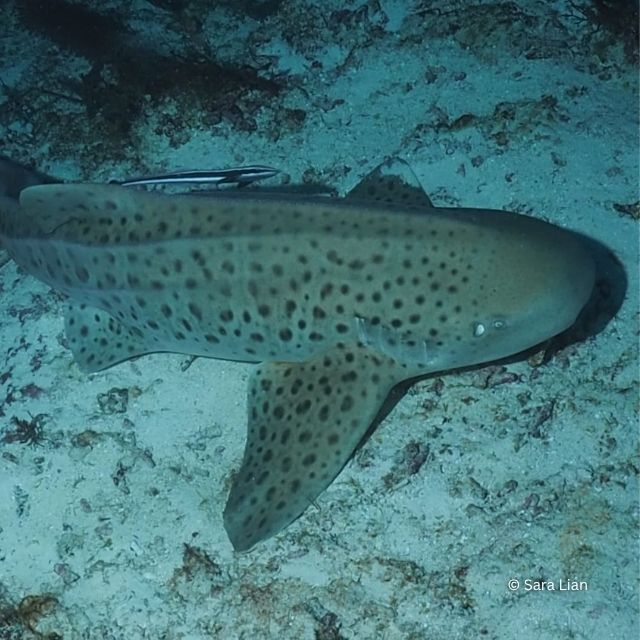
Photograph positions from sightings of a species will have to differ between shark, ray, skate, and chimaera.
- Shark and chimaera photographs need to be taken from a lateral point of view/side, covering from the snout to the caudal fin (tail)
- Ray and skate photographs could be taken from above or slightly from the side, covering their entire dorsal side (upper side) from the snout to the caudal fin (tail)
- An exception for the manta ray species (Mobula alfredi and Mobula birostris), in which their photograph could also be taken from below, covering their entire ventral side (underside) from the snout to the caudal fin (tail)
The photograph of the sighting should be as parallel as possible to the camera (lateral, from above or below the species) to make species identification more accurate. In case a photograph is not possible to be parallel or cover the necessary body parts of the species, but you deem that the photograph captures enough of the body parts of the species to be visually identified, the photograph may be taken.
Photographs may also be taken out of a video from a diving or snorkeling activity or from BRUVs (Baited Remote Underwater Video), by screen shooting or cropping part of the video where the shark, ray, skate, or chimaera appears. However, the resulting image should be aligned with the criteria for photographs above.
Landing Report
Photograph position from a landing or on board a vessel will also have to differ between shark, ray, skate, and chimaera.
- Shark and chimaera photographs need to be taken from a lateral point of view/side, covering from the snout to the caudal fin (tail)
- Ray and skate photographs could be taken from above or slightly from the side, covering their entire dorsal side (upper side) from the snout to the caudal fin (tail)
If a species is brought on board a vessel, either from a research or fishing trip, and is planned to be released alive, a photograph does not necessarily need to follow the criteria above. Thus, the photograph can be taken as quickly as possible to prevent killing the fish. However, please ensure the photographs capture enough features of the species to be visually identified.
All landing or on-board photographs are encouraged to have a ruler or any object of similar size to the species for size comparison.
Why is it important to consider how we take photographs of the species?
These photographic positions will help verify the species identification, as every species has its own specific characteristics
Data Collecting Guide
Completing the encounter data
After taking the photograph, complete the encounter data with the following information:
Species Data Guide
| Sighting | Landing |
| Name of photographer | Name of photographer |
| Elasmobranch species* | Elasmobranch species* |
| Length and weight* | Length and weight* |
| Sex* | Sex* |
| Date and time of photograph taken | Date and time of photograph taken |
| Location of photograph taken - Coordinates (Lat/Lon) | Location of photograph taken - Coordinates (Lat/Lon) |
| Encounter depth | Method of capture* |
| Habitat at sight |
* Optional
A presumed identification of the species is highly encouraged to be done in the field. Don’t worry if not, EPI team will help identify the species based on the photo you submit.
You can use a digital or physical notebook to record the data. You can also download our standard form as a guide for data collection.
Species Identification Guide
Differentiating the male and female species
Male elasmobranchs have a visible external reproductive organ called a clasper, while females do not. To be more specific, please use the references below to ensure the correct length measurement and identification of the species' sex.
Measuring species length
TL refers to Total Length, a measurement used for sharks, sawfish, guitarfish, and wedgefish, which measures the length of an elasmobranch from the snout parallel to the tip of the caudal fin. DW refers to Disc Width, a measurement for rays and skates (except sawfish, guitarfish, and wedgefish), which measures the length of the body width from one pectoral fin to the other.
Identifying elasmobranch species
Every elasmobranch species has different body characteristics (morphology). To differentiate each species, you can use our recommended identification books and guides here, or any other references based on your preferences.
If you are unsure about the species you have identified, the EPI team will help the species identification based on the photo you submit.
Submission Details
What you need to know before submitting your reports?
All photographs and data collected from the field, both from sightings or landings, can then be submitted through our website. Before submitting your data, you are required to read and agree to our Terms and Agreements.
If you encounter several individuals of the same species at the same time and location, only one photo and data needs to be submitted.
If you encounter two or more species at the same time and document them in one photo where both species are clearly shown in the photo, send photos and data for each species you encounter. One photo and data count for one species.
Our team will assess the submitted reports. Once verified, they will be published on our Explore Page and can be accessed and used by the public.
If you have more questions about the submission and publication process, check our FAQs or email us.
Type of Data
What kinds of encounter can you report?
There are 2 types of data that you can collect:- Sighting Data: encounters with living elasmobranchs in their natural habitat
- Landing Data: encounters with elasmobranchs that have been caught and/or landed (for example: fish market, harbor, ports, etc.).
Each type of data has its own guidelines for taking photographs and a list of information that needs to be collected.
FAQ
Frequently Asked Questions
What is the purpose of the sighting report?
Sighting reports document live encounters in the wild. They help researchers map species distribution, seasonality, and habitat use without relying only on fishery landings.
Do I need to follow the photo criteria if the species will be released?
Yes. Clear identification photos are still required even when the animal will be released. Follow the photography guidelines quickly and safely, then release the animal as soon as possible.
How should I take photographs for identification?
For sharks and chimaeras, take a lateral (side) view from snout to tail. For rays and skates, take a dorsal (top) view or slightly from the side. Include a ruler or object for size comparison if possible.
What information should I include in the landing report?
Include the date, location, species (if known), number of individuals, sex and size if possible, fishing gear, and photos of key identification features. Note whether the animal was retained or discarded.
Can I submit a report for a historical sighting?
Yes. Historical sightings are still valuable. Include the most accurate date and location you remember, along with any photos or notes from the original encounter.
Join our mission
You can take part in our mission to help maintain the balance of our ecosystems. By sharing your observation report, you are supporting our research and conservation programs!