Kalabia Project
Dedicated to improving conservation efforts for the endemic Raja Ampat epaulette shark in Southwest Papua, through combined biological and ecological research that involves the local community.
Background
Kalabia, the Walking Shark and the Risk of Extinction
Raja Ampat Epaulette Shark (Hemiscyllium freycineti) is a species of walking shark endemic to the Raja Ampat archipelago, Southwest Papua. The species is locally known as Kalabia.
On the IUCN Red List, Kalabia is currently classified as Near Threatened. However, anecdotal reports over the past five years suggest that its population is declining, mostly due to habitat degradation.
The Indonesian government has taken steps to fully protect this endemic species under Ministerial Decree No. 30 of 2023 issued by the Ministry of Marine Affairs and Fisheries, and through the Raja Ampat Regency Law No. 9 of 2012. In addition, approximately 80% of Kalabia’s habitat falls within Marine Protected Areas (MPAs). Nevertheless, the species is suspected to still face threats.
Another major challenge for Kalabia conservation is the limited ecological knowledge available for the species. More comprehensive research is needed to better understand its biology and ecology, providing the scientific basis for further management.
The Kalabia Project is a research program dedicated to addressing these challenges. The program aims to improve the conservation of Kalabia by collecting information on the species population through applied research, promoting citizen science as a long-term species conservation effort, and providing science-based management recommendations to local stakeholders. In addition, we aim to integrate species conservation with the growing tourism sector in Raja Ampat.
The program is currently implemented in two villages within the Raja Ampat archipelago: Arborek Village and Yenbuba Village.
Approach
Biology and Ecology Research and Conservation-Based Tourism Development
Biology and ecology research
Applied research to determine the species’ distribution in Arborek Village and Yenbuba Village, estimate its population size, habitat use, and identify possible threats.
Citizen science and tourism development
EPI believes that effective conservation must involve the local communities, one way is using the citizen science approach. We trained locals in Arborek Village as Kalabia Rangers, a group that actively promotes tourism activities that support Kalabia conservation. They take part in monitoring the species around Arborek Village together with guests and tourists.
Activities
Research and Conservation Initiatives
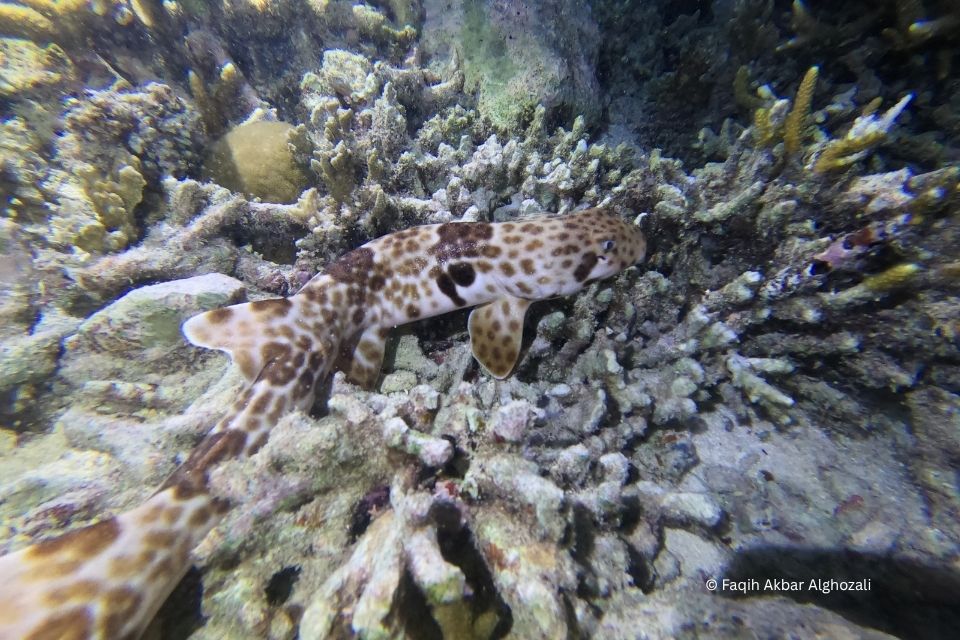
Random purposive area sampling survey
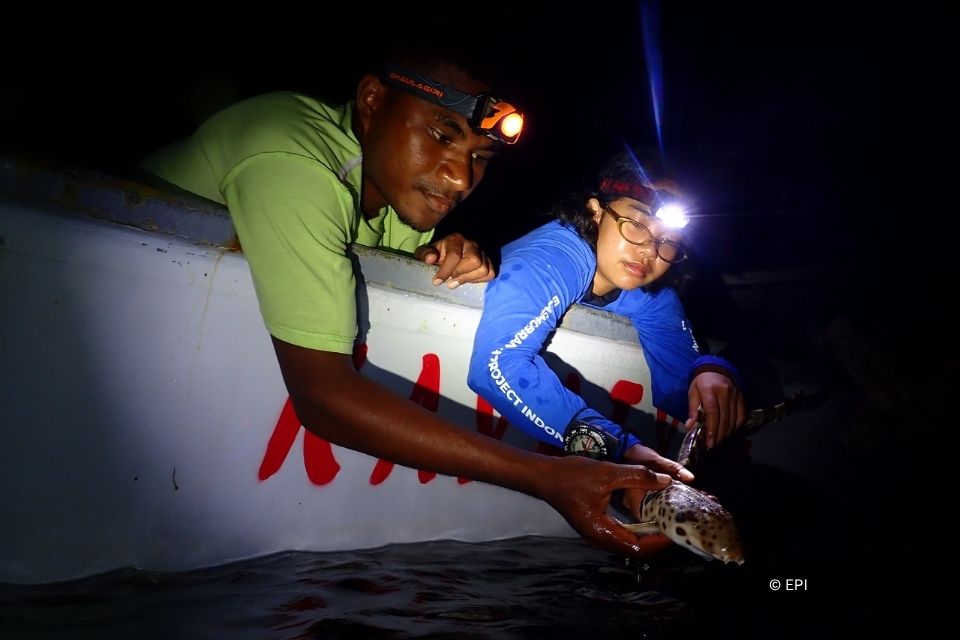
Observation in the coastal areas by walking, snorkeling, and diving to locate Kalabia.
Tagging
Using the capture-mark-recapture approach, we mark Kalabia with a specially designed tag bearing a unique identification number to monitor the species’ growth and movement.
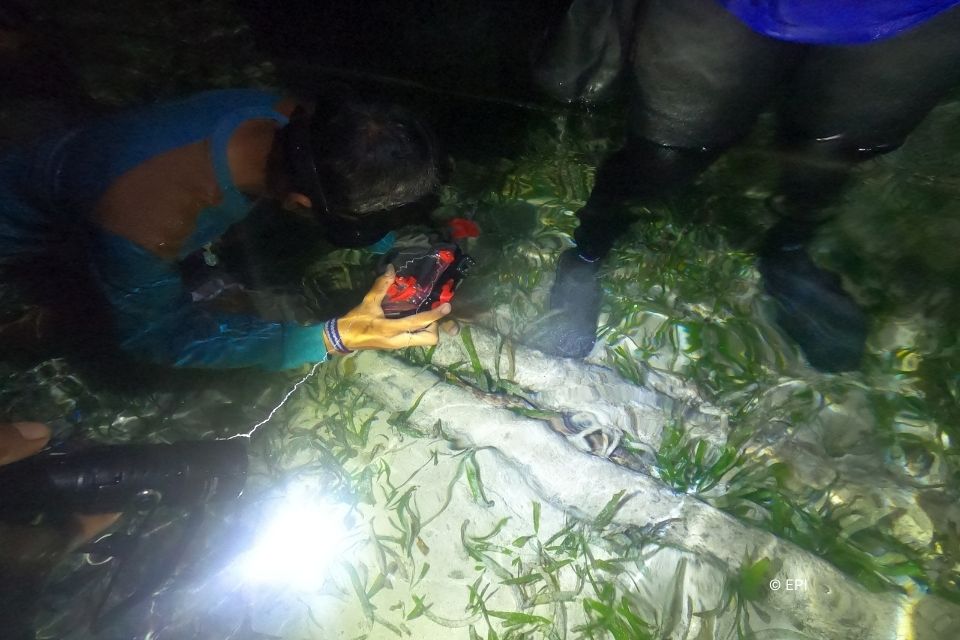
Photo identification
Identifying individuals by photographing their unique body pattern to estimate population size and distribution.
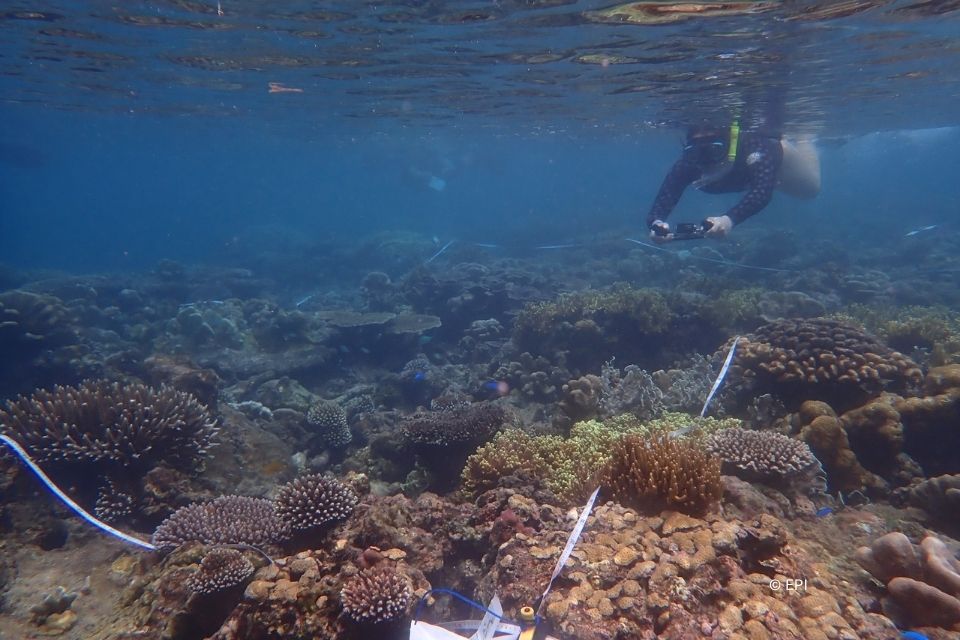
Habitat survey
Regular monitoring of coral reef and seagrass ecosystems as important habitats for the Kalabia.
Tourism carrying capacity study
A study to determine and recommend the maximum size of tourism practice for Kalabia observation without posing a risk to the species and ecosystem.
Kalabia Rangers Training
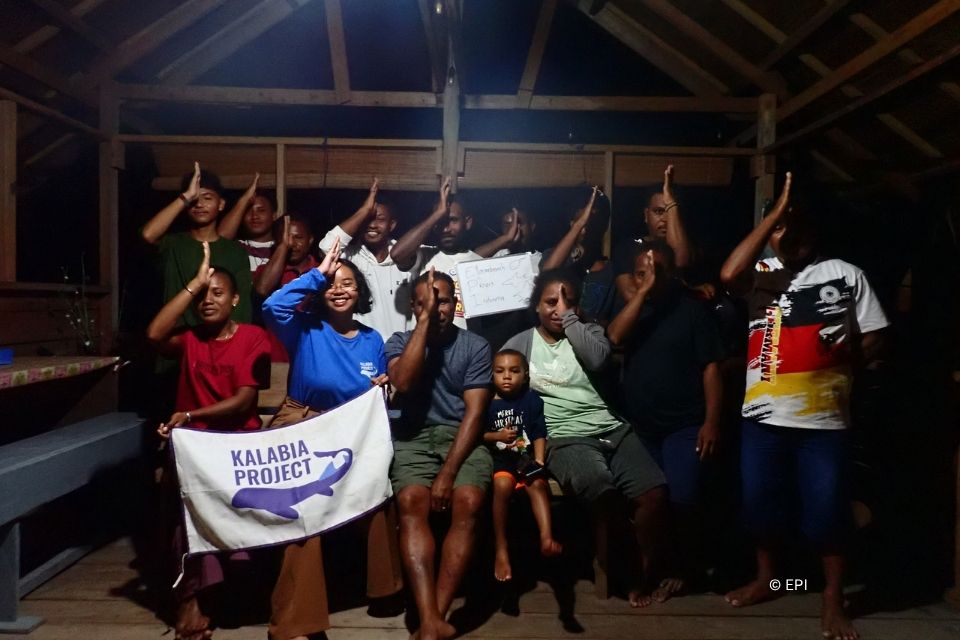
Development training for the Kalabia Rangers to support their activities, including hospitality training, basic conservation, and English class.
Craft creation training
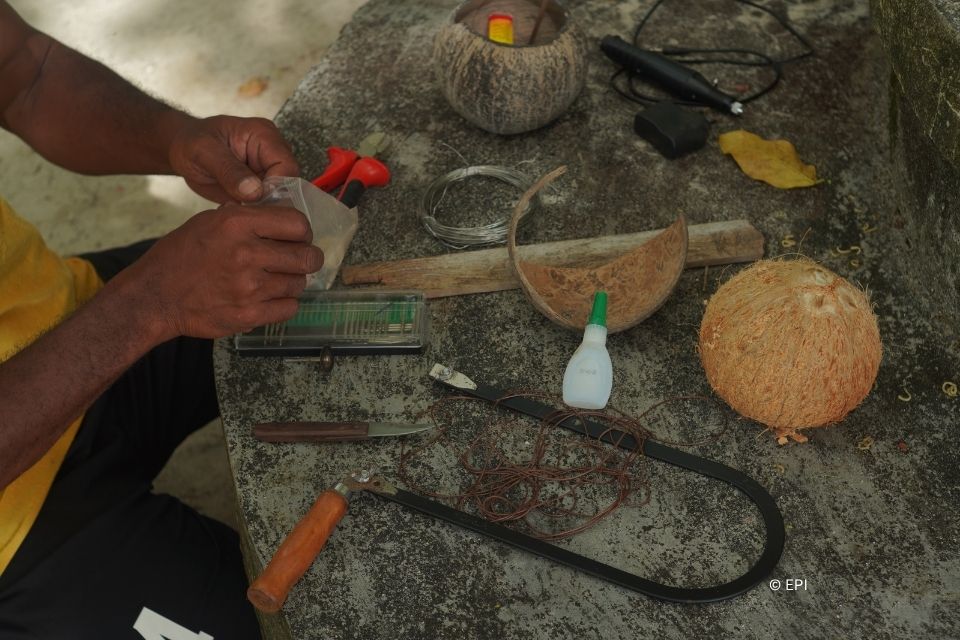
Training for local artisans and community members in Arborek to produce local crafts that can help boost the popularity and value of Kalabia in the tourism scene of Raja Ampat.